Kathy Renwald
My elephant ear plant is at least 10 year’s old and it’s so cramped in the pot it’s fighting for its life.
Several thick trunks, the size of a caveman’s club choke the growth of new plants struggling for space.

Most elephant ears sold here come in two type-ones with leaves pointing down, properly called colocasia, and those with the leaves pointed up called alocasia. I have both types, but the one needing dividing is an alocasia. You will also see them called Taro plants as well.

My take is, the dividing should have happened in the fall. But I alway remember the advice of a garden sage. When asked the best time to prune, he said when you have the time. And we all have time now don’t we?
I checked some books, some online sites, and looked at You Tube videos and the information was spotty, or suited to moderate climates where elephant ears live outside year long.
So using bits and pieces from everywhere I took the knife, the pick and the pruning saw into my hands and went at it.
First the elephant ear came out of its cramped pot, and was plunged into a big tub of water with a weak solution of fertilizer. I let it soak up the potion for a couple of days. Keep in mind, this plant loves water and nutrients at all times.
After spreading out a big tarp, the elephant ears came out of the pot for inspection. Roots were winding around and around, and four or five trunks were practically welded together.
I spread out all my tools on a table like a frontier dentist and selected a hook shaped weeder to tease the roots apart. It was surprising easy.

The trunks needed to be sawed apart. I started with a pruning saw, but it was too big for the cramped space. Turns out the best tool wasn’t in the bag, but in the kitchen-a bread knife. Not my best one, but a “B” team knife.

It sliced through the thickest part of the plant easily. I ended up with six elephant ears worth repotting and bits and pieces that I think have potential to grow.
After trimming off some of the longest roots, the new plants were put into fresh potting soil, mixed with composted manure and a bit of granular fertilizer.
Alocasia grow from both tubers and rhizomes, some types have a history as an edible crop. It is recommended to wear gloves when doing work such as dividing and cutting off leaves, since the liquid released is a skin irritant.
I now have six pots of elephant ears in various states and sizes, and a few random pieces that I may plant directing in the ground to see what happens.
 |
| I used a bread knife to divide the elephant ears |
My intention was to give some of these plants away. That may happen in the future but I’m really intrigued by how they will grow, so they’ll stay here. And also I am not good at sharing.
In the past, the alocasia has moved indoors for the winter with all its leaves in full glory, some years it looks fabulous, others not so much. Another option would be to cut off the leaves in the fall, and move it indoors to a cool space where it idles until the spring.
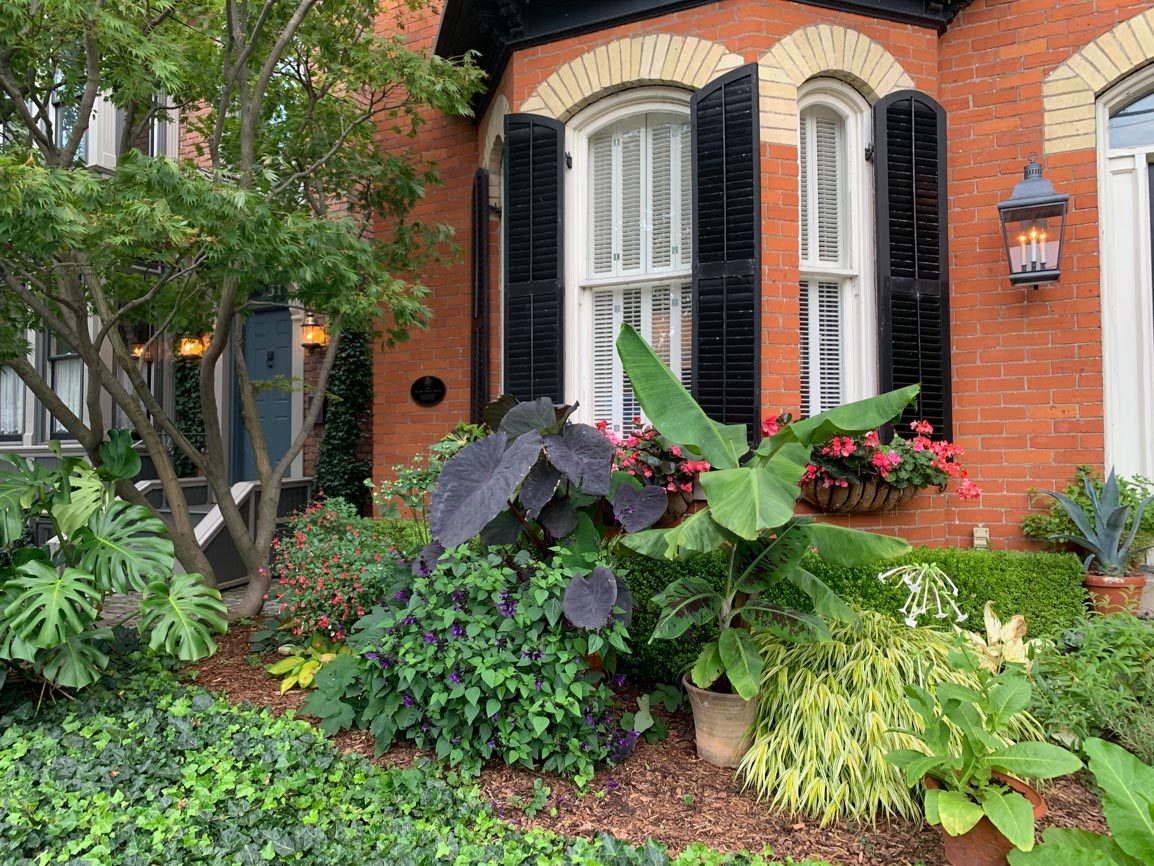
Both types are fabulous choices to give a tropical flair to the garden. The colocasia with its downward facing leaves that sway in the slightest wind is truly spectacular. Varieties such as Mojito, splashed with streaks of black, are worth the investment, but are hard to find. If you do nab a special one, store it for the winter.
 |
| Elephant ears called Mojito |
Now if you’ll excuse me, I’ve got a bunch of pots to stare at.
And here's a video on dividing the elephant ear.

.JPG)
.JPG)


